
Research
Working Papers
Is Money Overrated? Misperceived Satisfaction from Income
NBER Online Appendix Pre-registration AI Interview Toolkit
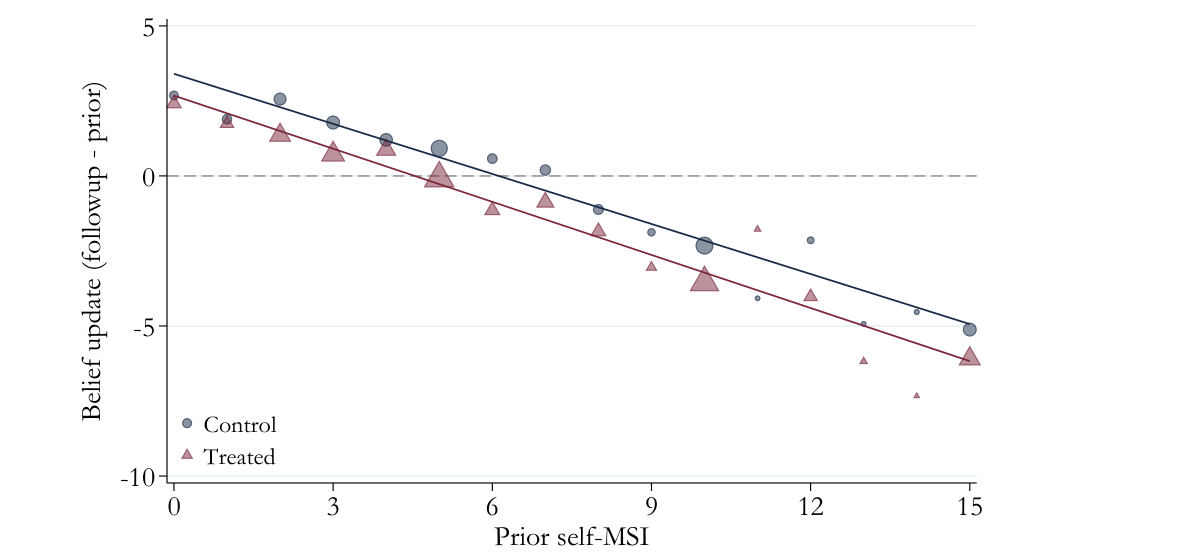
People often make important choices in pursuit of higher income, but do they place too much weight on income when deciding what path to take? We propose a simple model of misspecified learning in which individuals overestimate the marginal satisfaction from income—the expected effect of an income increase on overall life satisfaction—and therefore give income too much importance in their decisions. Guided by this model, we designed a pre-registered experiment that elicits beliefs about the marginal satisfaction from income and randomly assigns scientific evidence about it. Respondents report beliefs about the marginal satisfaction from income that are substantially above the scientific-evidence benchmark, both for themselves and for others, with a larger gap for themselves. These gaps shrink when respondents are exposed to scientific evidence, and the effects persist one month later. To study whether these beliefs matter for behavior, we measure income-versus-non-income trade-offs using job-choice scenarios tailored to each respondent and a real-world decision the respondent is facing. To elicit the latter, we make a methodological contribution: an AI-led interview method that moves beyond static, predefined survey instruments by combining the flexibility of qualitative interviewing with the discipline of closed-ended survey measurement. We find that these beliefs are consequential: after learning that income matters less for life satisfaction than they initially thought, respondents place less weight on income in their decisions.
The Undercounting of Births to Child Mothers
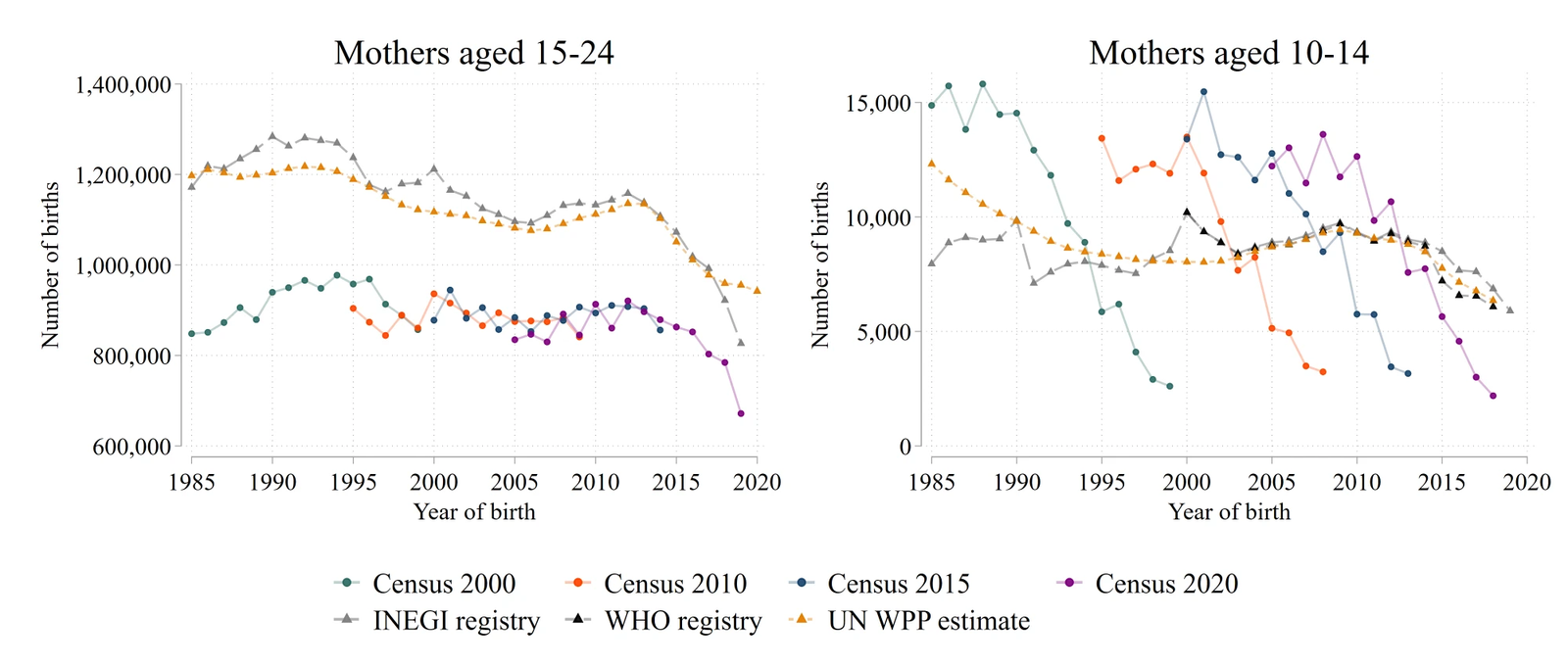
Accurate demographic data are essential for effective policy design, yet the private costs of disclosure may deter people from truthfully reporting sensitive information. We study this reporting failure in the context of child motherhood. Using administrative records from Brazil, Mexico, and the United States together with census data from 59 countries, we document that births to mothers aged 10–14 are frequently missing from contemporaneous birth registries but resurface in censuses taken a decade later, with undercounting on the order of 20–30 percent. We develop a model in which reporting decisions trade off instrumental benefits against age-dependent private costs. Its predictions match the data: truthful reporting rises sharply with the mother’s age, underreporting falls as more time elapses between the birth and data collection, and retrospective census estimates are more accurate than contemporaneous administrative records for this age group — but not for older mothers. The evidence points to social costs, rather than fear of legal consequences, as the primary driver of underreporting.
Work in Progress
- Human Capital and Political Capital — with Julian Martinez-Correa (University of Chicago) and Valdemar Pinho Neto (FGV EPGE).
Policy and Other Writings
- Lara Ibarra, G.; Macedo-Rubião, R.; and Fleury, E. (2021). Indirect Tax Incidence in Brazil: Assessing the Distributional Effects of Potential Tax Reforms. Policy Research Working Paper No. 9891, World Bank, Washington, DC.
- Macedo-Rubião, R.; Sousa, L.; and Cereda, F. (2020). COVID-19, Labor Market Shocks, and Poverty in Brazil: A Microsimulation Analysis. Policy Note, Poverty and Equity Global Practice, World Bank, Washington, DC.
- Macedo-Rubião, R. (2018). Bancos de Desenvolvimento em questão: o impacto do ocaso dos fundos estaduais no “D” do BDMG. In: Prêmio ABDE-BID, Associação Brasileira de Desenvolvimento, ABDE Editorial, Rio de Janeiro, pp. 99–126. — Winner, ABDE-IDB Selected Papers Prize.
- Macedo-Rubião, R. (2017). A short but deep dive into the economics of arts: Art Entrepreneurs in a Peripheral Market. Artivate: A Journal of Entrepreneurship in the Arts, 7(2), 3–26.